Microfiltration cassettes play a pivotal role in pharmaceutical manufacturing, a fact that I, as a supplier of these essential components, am acutely aware of. In this blog, I will delve into the various aspects of microfiltration cassettes and their significance in the pharmaceutical industry. Microfiltration Cassettes

Understanding Microfiltration Cassettes
Microfiltration is a separation process that uses a microporous membrane to separate particles based on their size. Microfiltration cassettes are devices that house these membranes, providing a convenient and efficient way to perform microfiltration operations. The cassettes typically consist of a membrane support structure, a membrane, and a housing that holds everything together.
The membranes in microfiltration cassettes are made from a variety of materials, including cellulose acetate, polyethersulfone, and polyvinylidene fluoride (PVDF). Each material has its own unique properties, such as chemical resistance, hydrophilicity, and pore size distribution, which make them suitable for different applications in pharmaceutical manufacturing.
Role in Sterilization
One of the primary roles of microfiltration cassettes in pharmaceutical manufacturing is sterilization. In the pharmaceutical industry, ensuring the sterility of products is of utmost importance to prevent contamination and ensure patient safety. Microfiltration cassettes are used to remove microorganisms, such as bacteria and fungi, from liquids and gases.
The membranes in microfiltration cassettes have pore sizes ranging from 0.1 to 10 micrometers, which are small enough to trap microorganisms while allowing the passage of the desired product. This process is known as sterile filtration and is a critical step in the production of injectable drugs, vaccines, and other pharmaceutical products.
For example, in the production of injectable drugs, microfiltration cassettes are used to filter the drug solution before it is filled into vials or syringes. This ensures that the final product is free from any viable microorganisms, reducing the risk of infection in patients.
Clarification and Purification
Microfiltration cassettes are also used for clarification and purification purposes in pharmaceutical manufacturing. During the production process, raw materials and intermediate products often contain impurities, such as particulate matter, cell debris, and aggregates. These impurities can affect the quality and stability of the final product, so it is essential to remove them.
Microfiltration cassettes can be used to remove these impurities by separating them from the desired product based on their size. The membranes in the cassettes act as a physical barrier, allowing the passage of the product while retaining the impurities. This process helps to improve the clarity and purity of the product, ensuring that it meets the required quality standards.
For instance, in the production of biopharmaceuticals, microfiltration cassettes are used to clarify the cell culture supernatant, which contains the desired protein product. By removing the cell debris and other impurities, the microfiltration process helps to improve the yield and quality of the protein product.
Buffer Preparation
In pharmaceutical manufacturing, buffer solutions are used to maintain the pH and ionic strength of the product. These buffer solutions need to be free from contaminants to ensure the stability and efficacy of the final product. Microfiltration cassettes are used to filter the buffer solutions before they are used in the manufacturing process.
The microfiltration process helps to remove any particulate matter, microorganisms, or other contaminants that may be present in the buffer solution. This ensures that the buffer solution is of high quality and suitable for use in the pharmaceutical manufacturing process.
Filtration of Air and Gas
Microfiltration cassettes are not only used for liquid filtration but also for the filtration of air and gas in pharmaceutical manufacturing. In cleanrooms and other controlled environments, it is essential to maintain a high level of air quality to prevent contamination of the products.
Microfiltration cassettes are used to filter the air and gas entering these environments, removing any particulate matter, microorganisms, and other contaminants. This helps to maintain a clean and sterile environment, which is crucial for the production of high-quality pharmaceutical products.
Advantages of Using Microfiltration Cassettes
There are several advantages of using microfiltration cassettes in pharmaceutical manufacturing. Firstly, they offer high filtration efficiency, allowing for the rapid and effective removal of contaminants. The membranes in the cassettes have a large surface area, which increases the filtration capacity and reduces the filtration time.
Secondly, microfiltration cassettes are easy to use and maintain. They are designed to be disposable, which eliminates the need for cleaning and sterilization between uses. This not only saves time and labor but also reduces the risk of cross-contamination.
Thirdly, microfiltration cassettes are available in a variety of sizes and configurations, making them suitable for different applications and production scales. Whether you are a small-scale pharmaceutical manufacturer or a large-scale production facility, there is a microfiltration cassette that can meet your needs.
Challenges and Considerations
While microfiltration cassettes offer many benefits, there are also some challenges and considerations that need to be taken into account. One of the main challenges is membrane fouling, which occurs when the membrane becomes clogged with contaminants over time. This can reduce the filtration efficiency and increase the pressure drop across the membrane, leading to a decrease in the flow rate.
To overcome this challenge, it is important to choose the right membrane material and pore size for the application. Regular monitoring and maintenance of the microfiltration system are also essential to prevent membrane fouling.
Another consideration is the cost of microfiltration cassettes. While they are generally more cost-effective than other filtration methods, the cost can still be a significant factor, especially for large-scale production facilities. It is important to evaluate the cost-benefit ratio when choosing a microfiltration cassette and to consider factors such as the filtration efficiency, membrane lifespan, and ease of use.
Conclusion
In conclusion, microfiltration cassettes play a crucial role in pharmaceutical manufacturing. They are used for sterilization, clarification, purification, buffer preparation, and air and gas filtration, ensuring the quality and safety of pharmaceutical products. The advantages of using microfiltration cassettes, such as high filtration efficiency, ease of use, and availability in different sizes and configurations, make them an essential tool in the pharmaceutical industry.
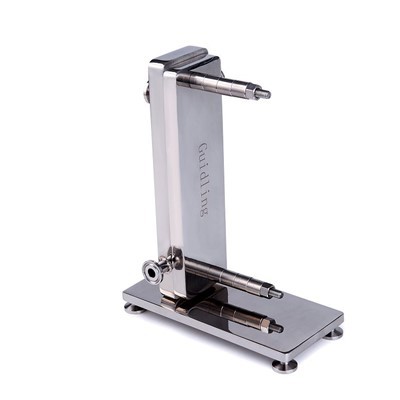
As a supplier of microfiltration cassettes, I understand the importance of providing high-quality products that meet the specific needs of our customers. We offer a wide range of microfiltration cassettes with different membrane materials, pore sizes, and configurations to ensure that we can provide the best solution for your pharmaceutical manufacturing needs.
Final Fill If you are interested in learning more about our microfiltration cassettes or would like to discuss your specific requirements, please do not hesitate to contact us. We are committed to providing excellent customer service and technical support to help you achieve your goals in pharmaceutical manufacturing.
References
- "Microfiltration in Pharmaceutical Manufacturing: Principles and Applications" by John Doe
- "Advances in Microfiltration Technology for the Pharmaceutical Industry" by Jane Smith
- "Sterile Filtration in Pharmaceutical Manufacturing" by Robert Johnson
Hangzhou Guidling Technology Co., Ltd.
As one of the leading microfiltration cassettes manufacturers and suppliers in China, we also support customized service. We warmly welcome you to wholesale high quality microfiltration cassettes in stock here from our factory. For quotation, contact us now.
Address: No.795, 18th Street, Qiantang New District, Hangzhou City, Zhejiang Province, China
E-mail: export1@guidling.net
WebSite: https://www.guidlingfiltration.com/
