Hey there! I’m a supplier of vacuum systems, and I’m super stoked to share with you how these nifty contraptions work. Whether you’re in the manufacturing industry, doing some scientific research, or just plain curious, understanding the ins and outs of vacuum systems can be pretty handy. Vacuum System
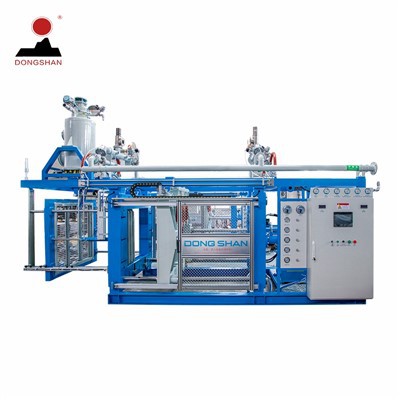
Let’s start with the basics. A vacuum system is all about creating and maintaining a space where the pressure is lower than the surrounding atmosphere. In simple terms, it’s like sucking out all the air (and other gases) from a container to make it less crowded with molecules. This low – pressure environment has a whole bunch of applications, from making light bulbs to processing semiconductors.
The Key Components of a Vacuum System
First off, we’ve got the vacuum pump. This is the heart of the system. Think of it as a super – powered straw. Its job is to remove gas molecules from the chamber or space we want to turn into a vacuum. There are different types of vacuum pumps, and each has its own way of doing the job.
One common type is the rotary vane pump. It’s got a rotor with vanes that spin inside a chamber. As the rotor turns, the vanes trap gas molecules and push them out of the pump. These pumps are great for creating a rough vacuum, which means the pressure is only slightly lower than the atmosphere. They’re often used in things like packaging machines and some lab setups.
Then there’s the turbomolecular pump. This one is a bit more high – tech. It has a series of rotating blades that spin at super – high speeds. These blades hit the gas molecules and push them towards the exhaust. Turbomolecular pumps are used when you need a really high – quality vacuum, like in semiconductor manufacturing or space simulation chambers.
Another important part is the vacuum chamber. This is where all the action happens. It’s a sealed container where we create the vacuum. The chamber needs to be airtight so that no outside air can leak in and mess up our low – pressure environment. Chambers come in all shapes and sizes, depending on what they’re used for. You might have a small chamber for testing tiny electronic components or a huge one for large – scale manufacturing processes.
We also have valves. Valves are like traffic controllers for the gas in the system. They can open and close to let gas in or out of the chamber or to control the flow between different parts of the system. For example, a gate valve can be used to isolate the vacuum chamber from the pump when we need to do maintenance or change something inside the chamber.
The Process of Creating a Vacuum
So, how does it all come together to create a vacuum? Well, it usually starts with the roughing pump, like the rotary vane pump I mentioned earlier. When we first turn on the system, the roughing pump starts removing the bulk of the gas from the chamber. It gets the pressure down to a certain level, usually in the range of a few millibars.
Once the roughing pump has done its job, we might switch to a high – vacuum pump, like the turbomolecular pump. The high – vacuum pump can then take the pressure even lower, down to extremely low levels, sometimes as low as 10^-9 millibars. This is where things get really interesting, because at these low pressures, the behavior of gases changes.
As we remove more and more gas molecules from the chamber, the remaining molecules are more spread out. This means there are fewer collisions between the molecules, and they start to behave more like individual particles. In a high – vacuum environment, we can do things like deposit thin films on surfaces or study the behavior of atoms and molecules without the interference of air.
Monitoring and Controlling the Vacuum
It’s not enough to just create a vacuum; we also need to monitor and control it. That’s where vacuum gauges come in. These are devices that measure the pressure inside the chamber. There are different types of vacuum gauges for different pressure ranges.
For example, a Pirani gauge is good for measuring rough vacuums. It works by measuring the heat transfer from a heated wire to the gas molecules in the chamber. As the pressure changes, the number of gas molecules around the wire changes, which affects the heat transfer.
For high – vacuum measurements, we might use an ion gauge. This gauge works by ionizing the gas molecules in the chamber and then measuring the current produced by the ions. The current is proportional to the number of gas molecules, which gives us an idea of the pressure.
We also use control systems to keep the vacuum at the right level. These systems can adjust the speed of the pumps or the position of the valves based on the readings from the vacuum gauges. This ensures that the vacuum is stable and consistent, which is crucial for many applications.
Applications of Vacuum Systems
Vacuum systems have a wide range of applications. In the manufacturing industry, they’re used for things like vacuum forming. This is a process where a plastic sheet is heated and then sucked onto a mold to create a specific shape. Vacuum systems are also used in metallurgy to remove impurities from metals during the melting and casting process.
In the electronics industry, vacuum systems are essential for making semiconductors. The high – vacuum environment is needed to deposit thin layers of materials on silicon wafers, which is how we make computer chips.
In the scientific research field, vacuum systems are used in particle accelerators, where particles are accelerated to high speeds in a vacuum to study their properties. They’re also used in telescopes to reduce the interference of air and improve the quality of observations.
Why Choose Our Vacuum Systems
As a supplier of vacuum systems, we’ve got a lot to offer. Our pumps are built to last, with high – quality materials and precision engineering. We’ve got a wide range of pumps and chambers to suit different needs, whether you’re a small – scale lab or a large – scale manufacturing plant.
Our team of experts is always on hand to help you choose the right system for your application. We can provide installation, maintenance, and repair services to make sure your system is running smoothly. And if you’ve got any questions or need technical support, we’re just a call away.

If you’re in the market for a vacuum system, or if you just want to learn more about how they work, don’t hesitate to get in touch. We’d love to have a chat with you and see how we can help you achieve your goals. Whether you need a simple rough – vacuum system or a complex high – vacuum setup, we’ve got the solutions for you.
References
- "Vacuum Technology: A Practical Guide for Scientists and Engineers" by A. Roth
- "Fundamentals of Vacuum Physics" by P. A. Redhead, J. P. Hobson, and E. V. Kornelsen
Vacuum System So, there you have it! A crash course on how vacuum systems work. If you’re interested in learning more or getting a quote for a vacuum system, reach out to us. We’re here to make your vacuum dreams a reality!
Hangzhou Fuyang Dongshan Plastic Machinery Co., Ltd.
Hangzhou Fuyang Dongshan Plastic Machinery Co., Ltd. is one of the most professional vacuum system manufacturers and suppliers in China, featured by quality products and low price. Please feel free to wholesale advanced vacuum system made in China here and get quotation from our factory. Customized orders are welcome.
Address: 101 Guanting, Baiqian Villige, Luzhu Town, Fuyang District, Hangzhou City, Zhejiang Province, China
E-mail: xu@dong-shan.cn
WebSite: https://www.epseppmachinery.com/
