Hey everyone, if you’ve ever worked with PMMA (that’s acrylic, for anyone still scratching their head) in a mixed tank operation, you know pressure control isn’t just a checkmark on a process sheet—it’s the make-or-break between a smooth production run and a total headache. As a PMMA mixed tank supplier, I get way too many panicked calls from folks who thought pressure was something they could “set and forget”… until their tank started acting up. Today, let’s break down what PMMA mixed tank pressure control actually is, why it’s non-negotiable, and how we tailor solutions that actually work (no generic fluff here). PMMA Mixed Tank
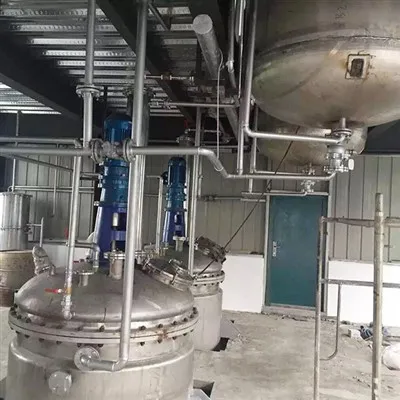
First, let’s ground this in the basics: what’s a PMMA mixed tank, and why does pressure get weird? PMMA (polymethyl methacrylate) is a polymer prized for its clarity, durability, and UV resistance—think acrylic sheets, lighting lenses, even dental aligners. But when you mix PMMA (usually in pellet or powder form) with solvents, plasticizers, or other additives in a stirred tank (mixed tank), that mix is a volatile beast. Unlike water or simple solvents, PMMA slurries or solutions have unique properties: they thicken as they react, off-gas leftover monomers (like methyl methacrylate, MMA, which is super flammable), and expand or contract wildly with temperature shifts. That’s where pressure comes in—internal tank pressure is basically a snapshot of how that mix is behaving right now, and if you don’t control it, you’re inviting leaks, voids in your final product, or even safety hazards.
Let’s talk about the two main types of pressure you’re dealing with in a PMMA mixed tank, because skipping this is where most people mess up. First, vapor pressure: that’s the pressure from the solvents and unreacted monomers evaporating off the PMMA mix. For MMA, that’s a big one—its boiling point is only ~100°C, so if your tank’s jacket heats up too fast, you’ll get a vapor spike that cranks internal pressure way higher than your tank is rated for. Second, mechanical pressure: that’s pressure from the stirrer itself, the weight of the PMMA slurry, or even expansion as the mix cures (wait—curing in a mixed tank? Yeah, some processes do partial curing before transferring, so that adds to the pressure too). A lot of operators mix these two up, which leads to them adjusting valves or stirrer speed incorrectly.
Now, here’s the fun part—why pressure control isn’t just slapping a gauge on a tank. Let’s say you’re running a PMMA lighting lens line. If your mixed tank’s pressure is too low during dispersion, you’ll get air bubbles trapped in the PMMA slurry. Those bubbles show up as tiny voids in the final lens, which make it cloudy or cause hot spots when the light hits it. I had a customer last year—they made custom acrylic store signs—who was rejecting 12% of their product because of voids, and they couldn’t figure out why. Turns out, their old tank’s pressure relief valve was set too high, so when the stirrer pulled in fresh PMMA powder, it sucked air into the mix instead of pushing out any vapor. We swapped their valve for a modular one we designed specifically for PMMA, adjusted the pressure setpoint to match their mix’s vapor pressure, and their reject rate dropped to under 2% within a month. That’s the kind of win we live for.
Then there’s the safety angle, which I can’t stress enough. MMA isn’t just volatile—it’s also a respiratory irritant, and at high pressures, it can escape through even the smallest seal on your tank. A few years back, we had a small client in Ohio who skipped pressure monitoring because their old tank “never had issues before.” They were mid-batch when a vapor pressure spike blew out a seal, releasing MMA fumes that shut down their plant for 3 days and cost them over $20k in downtime. Pressure control isn’t just about product quality—it’s about keeping your team safe and your operations running.
So, what does actual PMMA-specific pressure control look like, compared to generic tank pressure systems? Generic setups use a basic relief valve and a pressure gauge, but PMMA needs something adaptive. Here’s how we design our systems (and what you should be looking for):
First, real-time, PMMA-tailored pressure monitoring. Regular gauges only tell you current pressure—we use smart sensors that sync with your tank’s temperature, PMMA feed rate, and stirrer speed. Because here’s the thing: the pressure of a PMMA mix isn’t static. If you’re feeding PMMA powder faster, the mix is thicker, so vapor can’t escape as easily, and pressure goes up. If your jacket temp drops, solvent condenses, pressure goes down. Our sensors pick up those shifts before they become problems, not just after. For example, if the sensor notices pressure climbing 2 psi over 5 minutes (way faster than normal for that batch), it triggers a small pressure relief instead of blowing the whole tank.
Second, modular pressure regulation that doesn’t mess with PMMA’s consistency. A lot of relief valves have narrow ports that get clogged with PMMA powder or cured sludge, which makes them stop working when you need them most. We use valves with wide, self-cleaning ports—plus, we can integrate a small purging system with nitrogen, so if pressure gets too high, nitrogen flushes the vapor out without adding contaminants that mess up your PMMA’s clarity. That’s a big one for clear products like acrylic sheets—even a tiny bit of leftover nitrogen residue can cause hazing.
Third, batch-specific pressure profiles. Every PMMA process is different. Some folks are making high-viscosity PMMA for moldings, others are making low-viscosity for coatings. We don’t sell a one-size-fits-all setpoint—we work with you to build a custom pressure profile for each batch. For example, if you’re running a low-viscosity PMMA coating mix, we’ll set a lower pressure range (1-5 psi) to keep solvent evaporation steady, while for a high-viscosity molding mix, we set 3-7 psi to help the stirrer push through the thick slurry without trapping air.
Wait, let’s also talk about common mistakes we see, because these are avoidable. Number one: setting pressure too high to “speed up” mixing. A lot of operators think higher pressure means faster vapor escape, so they crank the relief valve closed. Wrong—too much pressure prevents the stirrer from fully dispersing PMMA and additives, leading to lumpy mix that causes defects. Number two: ignoring pressure during charging and discharging. When you add fresh PMMA powder to the tank (charging) or pump out the finished mix (discharging), pressure shifts fast. A lot of people turn off monitoring during these steps to “save energy,” but that’s when most pressure spikes happen. Number three: using generic pressure parts. A valve for a water tank won’t stand up to MMA’s corrosive properties, or the high temperatures PMMA mixing often uses. We use 316L stainless steel and PTFE seals in all our pressure components—materials that work with PMMA, not against it.
Another thing: pressure control doesn’t work in a vacuum (pun totally intended). It needs to talk to your entire tank system. If your stirrer is going too fast, that creates extra mechanical pressure; if your jacket is overheating, that cranks vapor pressure. Our pressure control systems integrate with your tank’s PLC, so if pressure gets too high, it slows the stirrer or adjusts the jacket temp automatically. We had a customer who was hand-adjusting their stirrer speed all day, which led to inconsistent pressure—now the system does it for them, and their operator has time to do other tasks instead of babysitting gauges.
Let’s get concrete with an example. Suppose you’re producing PMMA resin for 3D printing filaments. You need the mix to be perfectly uniform, no voids, and consistent viscosity. Here’s how our pressure control system would operate for your batch:
- Charging phase: You add PMMA pellets, solvent, and additives. The sensor pulls pressure data—starts low (1 psi) to let the stirrer break down pellets without sucking air, and slowly bumps up to 2 psi as the mix starts to thicken.
- Mixing phase: The sensor monitors for vapor spikes. If temp jumps 5°C, pressure climbs to 3 psi (still within set range) and the relief valve opens just 10% to release vapor, so you don’t lose too much solvent. If pressure spikes to 5 psi (our warning threshold), it triggers a small nitrogen purge to stabilize.
- Transfer phase: When the mix is done, pressure drops gradually to 1 psi to make sure the entire batch gets pumped out, no leftover material stuck in the tank that could cure and clog it.
No rejects, no safety scares, no downtime. That’s the value of custom pressure control for PMMA mixed tanks.
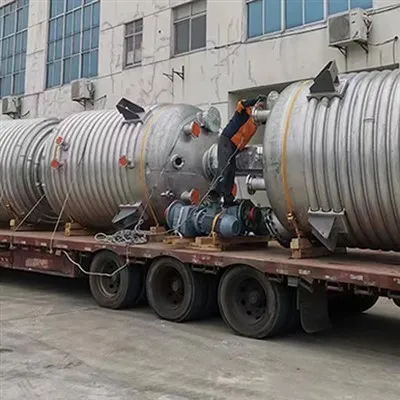
Now, as a supplier, we don’t just sell parts—we help you figure out what you actually need. We’ve worked with 100+ different PMMA operations, from small 100-gallon batch tanks to large 10,000-gallon production lines, so we know the quirks of every setup. Whether you’re retrofitting an old tank or building a new one, we’ll walk you through pressure testing, help you set up your batch profiles, and even provide on-site training so your team knows exactly how to use the system (no confusing manuals).
Industrial Reactor If you’re tired of dealing with pressure-related rejects, safety scares, or wasted time and money, let’s chat. We can send a free pressure analysis for your current PMMA mixed tank—no sales pitch, just a honest look at where your pressure control is falling short and what we can do to fix it. Don’t let pressure be the reason your PMMA process falls flat.
References
- Brandrup, J., Immergut, E. H., & Grulke, E. A. (2003). Polymer Handbook (4th ed.). Wiley.
- McCabe, W. L., Smith, J. C., & Harriot, P. (2005). Unit Operations of Chemical Engineering (7th ed.). McGraw-Hill.
- O’Neil, M. J. (2006). The Merck Index: An Encyclopedia of Chemicals, Drugs, and Biologicals (14th ed.). Merck & Co.
Wuxi Quansheng Industrial Equipment Co., Ltd.
As one of the most professional PMMA mixed tank manufacturers and suppliers in China, we have world-leading production equipment and strong manufacturing capabilities. Welcome to buy high quality PMMA mixed tank for sale here from our factory. For price consultation, contact us.
Address: No.10, Fulaiqiao Road, Hudai Town, Binhu District, Wuxi City, Jiangsu Province, China
E-mail: 397293586@qq.com
WebSite: https://www.pmmatech.com/
