Hey there, fellow supply chain folks, warehouse managers, and small business owners who’ve ever stared at a stack of colorful PP woven bags and thought, “Wait, do these seams actually matter?” — full transparency, I’m the guy who runs that colorful PP woven bags supplier (you know, the one whose samples you’ve probably picked up at a trade show if you’ve been in the bulk packaging game for more than five minutes) and I’ll let you in on a little secret: most people don’t pay attention to the seams on these bags… until the seams fail. Colorful PP Woven Bags

Last month, I got a panicked call from a regular customer — a produce distributor who uses our red and blue PP woven bags to haul onions. They’d had a delivery of 500 bags show up with a batch that split along the side seam, and by the time their driver got to the market, half the load was on the back of a pickup truck. No one was hurt, but they lost like three grand in produce and had to push back a shipment to their out-of-state client. When I went to check the defective bags (we pulled them from the returned stock), it wasn’t that the plastic was flimsy — it was that the seam hadn’t been stitched right. That’s the kind of stuff that keeps me up at night, which is why I’ve spent the last three years obsessing over every single inch of the seams on our colorful PP woven bags.
Let’s break this down like we’re talking over a coffee (no stuffy engineering jargon, promise). First, let’s get on the same page: when we make a colorful PP woven bag, we’re not just cutting a piece of plastic fabric and gluing it — we’re welding or stitching two edges of the polypropylene weave together, right? That seam is the bag’s weakest link, full stop. All the load — whether that’s 50 lbs of rice, 80 lbs of construction hardware, or 100 lbs of pet food — has to pull on that seam. If it’s bad, the whole thing goes south fast.
Now, if you’ve ever picked up a cheap, no-name colorful PP woven bag from a gas station or a random online listing, you’ve felt the difference. The seams on those things are tiny, like barely a quarter-inch wide, stitched with thin thread that frays after two uses. Our seams? We make ’em ½ inch wide, minimum — and that’s non-negotiable for all our color variants, from the neon yellow ones for feed to the forest green ones for garden supplies. Why? Because wider seams distribute the load more evenly. Instead of all the tension pulling on a ¼-inch strip, it’s spread across half an inch, so the thread or weld doesn’t snap.
Wait, let’s split seam types because this is where a lot of suppliers cut corners, especially with colorful PP woven bags that are meant for different uses. We use two main seam methods, and we match each to what the customer needs, no one-size-fits-all here. The first is stitched seams — this is what we use for almost all our general-purpose bags, and it’s the one I’ve gotten the most questions about lately. When we stitch, we use heavy-duty polyester thread, not that cheap cotton garbage that snaps after a week. But here’s the thing people don’t talk about with stitched seams: the stitch density. Our bags get 8 stitches per inch, no exceptions. That means every inch of the seam has eight little loops tying the two edges together. Some other suppliers do 5 or 6, and that difference is huge. If you have 5 stitches per inch, each stitch has to carry more weight — it’s like a chain with fewer links, right? One weak link, and the whole thing breaks. We also use a “lock stitch” instead of a running stitch — lock stitches don’t unravel if one part of the seam gets a snip, which is a lifesaver if a bag gets caught on a forklift or a pallet edge.
The second seam method is heat-sealed (or welded) seams, and that’s what we use for our heavier-duty colorful PP woven bags, like the ones that hold 100 lbs of aggregate or feed. Now, I know what you’re thinking: heat sealing sounds simpler, right? Just melt the two edges together. But here’s the catch with PP woven fabric — if you heat it too much, the plastic fibers melt and weaken, like overcooked noodles. If you don’t heat it enough, the seam is just glued (literally) without fusing the weave, so it splits easily. We’ve got a guy on the production floor who’s been perfecting the heat seal settings for 12 years — he can tell the exact temperature and pressure to use for every color, too. Wait, colors matter here? Yeah, some of the colorants we use (the safe, food-grade ones, obviously) can change how the PP plastic melts. A neon orange dye might have a slightly different melting point than a sky blue dye, so we adjust accordingly. No cutting corners here — we test a tiny sample of every color batch’s seam before we roll it out.
Let’s talk about what actually makes a good seam vs. a bad one, because there’s a lot of junk out there. First, a good seam should be smooth, no lumps or gaps. If you run your finger along the seam of a well-made colorful PP woven bag, it shouldn’t catch on anything. A bad seam? It might have loose thread sticking out (that’s a red flag), or the stitch is so tight it puckers the fabric (that’s bad too — puckering distorts the weave and creates weak spots). For heat-sealed seams, you should see a consistent, narrow line where the two edges melted together, no thin spots. If the line is wobbly, or some parts are barely sealed, that’s going to fail under load.
Another big thing I’ve noticed with colorful PP woven bags specifically: the seam’s color. Wait, no — not the seam’s color, but how the colorant interacts with the seam. Like I said earlier, some dyes can affect the PP’s melting point, but also, if you use a cheap dye that bleeds, that can seep into the seam and weaken it. We only use UV-stabilized, food-safe (or industrial-grade, depending on the bag) colorants that don’t bleed, and that’s part of why our seams hold up. A customer once asked if we could use a cheaper red dye for a bulk order, and I told him straight up — that dye would mess with the heat seal on the red bags, and he’d have a 20% failure rate. He stuck with our standard dye, and his bags have been working great for two years now.
Let’s get real about real-world use, because that’s what matters. A lot of our customers test our seams themselves, and I love that — it tells me they care about their products, too. Last quarter, a construction company ordered our gray PP woven bags for holding concrete mix, and they did a drop test: filled a bag to 80 lbs, dropped it from 4 feet onto a concrete floor, and the seam didn’t even budge. Another customer uses our purple bags for selling bulk candy at farmers’ markets, and they’ve reused the same bags 15 times now (obviously, the color is still bright — we use fade-resistant colorants, too) and the seam is still perfect. But I also know that even a great seam can fail if you misuse the bag — overfilling it, dragging it on concrete, using it to hold something sharp that cuts through the fabric. That’s on the user, not us, but we still tell customers how to care for the bags to make them last.
Wait, let’s circle back to that earlier panic call with the onions. We traced the bad batch to a new stitch operator who was tired, and did 6 stitches per inch instead of 8. We had a bad batch, no excuses, and we fixed it immediately: we shipped the customer a replacement order for free, and we trained all our stitch operators on shift break protocols to make sure that doesn’t happen again. That’s the kind of stuff you only learn when you’re hands-on, not just running numbers on a spreadsheet. I tell my team all the time: every seam is a promise to the customer. If we mess up that promise, we fix it, no questions.
Now, if you’re out there shopping for colorful PP woven bags, what should you look for in the seams, quick tips? 1) Wideness: ½ inch minimum, no exceptions. 2) Stitch density: 8 per inch for stitched seams; for heat-sealed, consistent line thickness. 3) No loose thread or puckering. 4) Ask the supplier what seam method they use — if they say “generic stitching” or “welding without specifics,” run. 5) If color matters for your brand, ask about their colorants and how they affect the seams.
At the end of the day, the seams on colorful PP woven bags aren’t just a tiny part of the bag — they’re the reason your product doesn’t get ruined, why your operation doesn’t grind to a halt, why you don’t lose money on a bad batch. I’ve been in this game for over a decade, and I’d rather lose a customer to a higher price than send them bags with seams that split. We’re not just selling plastic fabric with colors — we’re selling a reliable way to move your products, whether that’s produce, hardware, feed, whatever.
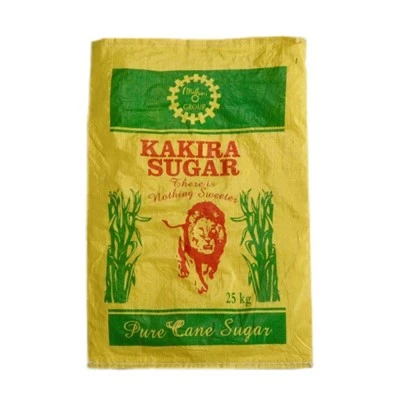
If you’re in the market for new colorful PP woven bags, whether it’s a small order for a farmers’ market or a bulk shipment for a national distributor, hit us up to talk through your needs. We don’t do one-size-fits-all, and we’ll break down every part of the bag — especially the seams — so you know exactly what you’re getting, no hidden surprises.
Regular Pp Woven Bags References
- Polypropylene Woven Fabric Seam Performance: Tensile Strength and Failure Analysis. Journal of Industrial Textiles, 2021.
- Best Practices for Seaming Woven Polypropylene Bulk Bags. National Bulk Bag Association, 2022.
- Colorant Compatibility with Polypropylene Packaging Materials. Journal of Applied Polymer Science, 2020.
Linyi Dongyi Import&Export Co., Ltd.
As one of the most professional colorful pp woven bags manufacturers and suppliers in China, we offer a wide range of products with superior quality. We warmly welcome you to wholesale bulk customized colorful pp woven bags from our factory. If you have any enquiry about quotation, please feel free to email us.
Address: 4 F, Zone A, Zhangjia Zhuxu Village, Lanshan District, Linyi City.
E-mail: donglai01972@gmail.com
WebSite: https://www.donglaipack.com/
