Hey there! I’m a supplier of power towers, and I’m super stoked to share with you how these bad boys distribute electricity to consumers. It’s a pretty fascinating process, and I’m gonna break it down for you in a way that’s easy to understand. Power Towers
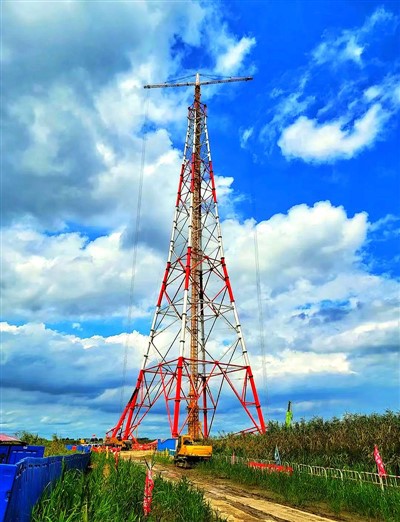
Let’s start at the beginning. Electricity is generated at power plants, which can use different energy sources like coal, natural gas, hydro, nuclear, or renewable sources such as wind and solar. Once the electricity is produced, it needs to be transported from the power plant to where it’s needed – our homes, businesses, and industries. That’s where power towers come in.
Power towers, also known as transmission towers, are like the highways of the electrical grid. They’re tall structures made of steel or concrete that support high – voltage power lines. These power lines are made of conductive materials, usually aluminum or copper, which can carry large amounts of electricity over long distances with relatively low losses.
The first step in the distribution process is the transmission of electricity from the power plant. The electricity generated at the power plant is at a relatively low voltage. But to transport it efficiently over long distances, it needs to be stepped up to a much higher voltage. This is done using transformers at the power plant. High – voltage transmission is more efficient because it reduces the amount of energy lost as heat in the power lines.
Once the electricity is at a high voltage, it’s sent out through the power lines supported by power towers. These power towers are strategically placed along the transmission routes, which can span hundreds or even thousands of miles. The towers are designed to withstand various environmental conditions, like strong winds, heavy snow, and lightning. They need to be sturdy enough to keep the power lines in place and prevent them from sagging or coming into contact with each other.
As the electricity travels along the high – voltage transmission lines, it eventually reaches a substation. A substation is like a traffic control center for electricity. At the substation, the high – voltage electricity is stepped down to a lower voltage using transformers. This lower voltage is more suitable for distribution to local areas.
After the electricity is stepped down at the substation, it’s sent out through a network of distribution lines. These distribution lines are usually at a lower voltage than the transmission lines and are carried by smaller poles or sometimes buried underground. The distribution lines carry the electricity to neighborhoods, commercial areas, and industrial zones.
In residential areas, the electricity is further stepped down to the standard household voltage, which is typically 120 or 240 volts in the United States. This low – voltage electricity is then connected to individual homes through service lines. These service lines run from the distribution lines to the electrical meters installed at each home, which measure the amount of electricity consumed.
Now, let’s talk a bit about the role of power towers in all of this. Power towers are crucial for ensuring a reliable and efficient electricity supply. Without them, it would be extremely difficult to transport electricity over long distances. They provide a stable support for the high – voltage power lines, keeping them safe and secure.
One of the challenges in power distribution is dealing with power losses. Even though high – voltage transmission reduces losses, there are still some losses that occur in the power lines. These losses are mainly due to the resistance of the conductive materials in the lines. Power towers help minimize these losses by supporting the lines in a way that reduces the resistance and also by providing proper insulation.
Another important aspect is the maintenance of power towers. Regular inspections are necessary to make sure the towers are in good condition. We need to check for any signs of corrosion, damage from weather events, or loose connections. If a tower is damaged, it can pose a serious risk to the electrical grid and even to public safety. So, we have a team of experts who are constantly on the lookout for any issues and take immediate action to fix them.
In addition to the technical aspects, power towers also have an impact on the environment. When building power towers, we need to consider factors like land use, wildlife habitats, and visual impact. We work closely with environmental experts to minimize these impacts. For example, we try to choose routes that avoid sensitive areas and use designs that are less intrusive.
As a power tower supplier, I’ve seen firsthand the importance of these structures in our daily lives. They’re the backbone of the electrical grid, ensuring that we have a reliable supply of electricity. Whether it’s powering our lights, charging our phones, or running our factories, power towers play a vital role.
If you’re in the market for power towers, whether you’re involved in a new power project or need to replace existing towers, I’d love to have a chat with you. I can offer you high – quality power towers that are designed to meet your specific needs. We’ve got a wide range of tower designs and sizes, and we can customize them to fit your project requirements.
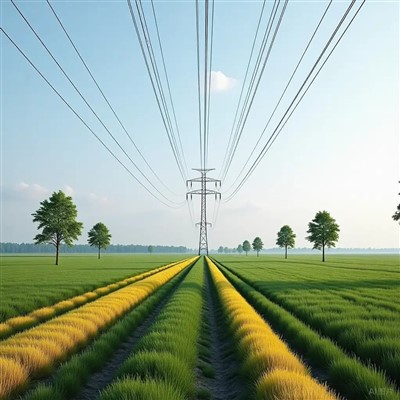
Our team of experts can also provide you with installation and maintenance services. We understand that every project is unique, and we’re committed to providing you with the best solutions. So, if you’re interested in purchasing power towers, don’t hesitate to reach out. We’re here to help you get the job done right.
Monitoring Tower References:
- "Electricity Transmission and Distribution" – Textbook on electrical power systems
- Industry reports on power tower technology and maintenance
Hebei Yifeng Steel Structure Co., Ltd.
As one of the most professional power towers manufacturers and suppliers in China, we offer a wide range of products with superior quality. Please feel free to buy cost-efficient power towers for sale here from our factory. Contact us for more details.
Address: Guangchuan Town Industrial Zone, Jing County, Hengshui City, Hebei Province
E-mail: hbyfgjg@163.com
WebSite: https://www.yf-powertowers.com/
