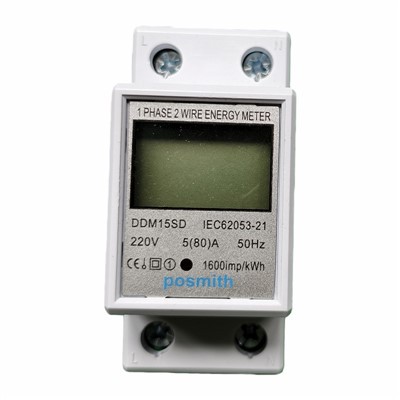
In the evolving landscape of energy management, demand response management has emerged as a crucial strategy for balancing electricity supply and demand, reducing peak loads, and enhancing grid stability. As a supplier of multi-function meters, I am often asked whether our meters can be effectively used for demand response management. In this blog, I will explore the capabilities of multi-function meters in the context of demand response management, highlighting their features, benefits, and real-world applications. Multi Function Meter
Understanding Demand Response Management
Demand response management involves adjusting electricity consumption in response to changes in electricity prices, grid conditions, or requests from utility companies. By reducing or shifting electricity usage during peak demand periods, consumers can help alleviate stress on the grid, avoid potential blackouts, and lower their energy costs. This can be achieved through various strategies, such as load shedding, load shifting, or using distributed energy resources like solar panels and batteries.
The Role of Multi-Function Meters in Demand Response Management
Multi-function meters are advanced electrical measuring devices that can measure, record, and analyze a wide range of electrical parameters, including voltage, current, power, energy consumption, and power quality. These meters are equipped with communication capabilities, allowing them to transmit data to a central monitoring system in real-time or at regular intervals. This data can be used by utility companies, energy managers, and consumers to monitor electricity usage, identify patterns, and make informed decisions about energy consumption.
In the context of demand response management, multi-function meters play a crucial role in providing accurate and timely information about electricity consumption. Here are some ways in which multi-function meters can support demand response initiatives:
Real-Time Monitoring
One of the key features of multi-function meters is their ability to provide real-time data on electricity consumption. This allows consumers to monitor their energy usage continuously and make adjustments as needed. For example, if a consumer notices that their electricity consumption is approaching a pre-set threshold, they can take steps to reduce their usage, such as turning off non-essential appliances or adjusting the temperature settings on their HVAC system.
Utility companies can also use real-time data from multi-function meters to monitor grid conditions and identify areas where demand response is needed. By analyzing the data, they can determine which customers are consuming the most electricity during peak periods and send targeted demand response signals to those customers.
Load Profiling
Multi-function meters can record electricity consumption data over time, allowing for the creation of detailed load profiles. These profiles show how electricity consumption varies throughout the day, week, and month, and can help identify peak demand periods and patterns of energy usage. By understanding these patterns, consumers can better plan their energy consumption and implement demand response strategies more effectively.
For example, a business owner may notice that their electricity consumption spikes during certain hours of the day when they are running heavy machinery. By scheduling maintenance or shifting production to off-peak hours, they can reduce their peak demand and take advantage of lower electricity prices.
Remote Control and Automation
Many multi-function meters are equipped with remote control capabilities, allowing utility companies to remotely adjust the electricity consumption of connected devices or systems. This can be particularly useful in demand response programs, where utility companies need to quickly and efficiently reduce demand during peak periods.
For example, a utility company may send a signal to a smart thermostat installed in a customer’s home, instructing it to raise the temperature setting by a few degrees. This small adjustment can result in a significant reduction in electricity consumption, especially if multiple customers participate in the demand response program.
In addition to remote control, multi-function meters can also be integrated with automation systems to enable automatic demand response. For example, a building management system can be programmed to automatically turn off non-essential lighting and HVAC systems during peak demand periods based on signals received from the multi-function meter.
Energy Efficiency Analysis
Multi-function meters can provide valuable insights into energy efficiency by measuring and analyzing various electrical parameters. By comparing actual energy consumption with expected consumption based on industry benchmarks or historical data, consumers can identify areas where energy efficiency improvements can be made.
For example, a multi-function meter may show that a particular piece of equipment is consuming more electricity than expected. By inspecting the equipment and making necessary repairs or adjustments, the consumer can reduce energy waste and lower their electricity bills.
Benefits of Using Multi-Function Meters for Demand Response Management
There are several benefits to using multi-function meters for demand response management, both for consumers and utility companies.
For Consumers
- Cost Savings: By participating in demand response programs and reducing their electricity consumption during peak periods, consumers can take advantage of lower electricity prices and reduce their energy bills.
- Energy Efficiency: Multi-function meters provide detailed information about energy consumption, allowing consumers to identify areas where energy efficiency improvements can be made. By implementing energy-saving measures, consumers can reduce their overall energy consumption and save money in the long run.
- Environmental Sustainability: By reducing peak demand and relying less on fossil fuel-based power generation, consumers can help reduce greenhouse gas emissions and contribute to a more sustainable energy future.
For Utility Companies
- Grid Stability: Demand response management helps utility companies balance electricity supply and demand, reducing the risk of blackouts and ensuring the stability of the grid.
- Cost Savings: By reducing peak demand, utility companies can avoid the need to build new power plants or upgrade existing infrastructure, resulting in significant cost savings.
- Customer Engagement: Offering demand response programs and using multi-function meters to provide real-time energy information can help utility companies engage with their customers and build stronger relationships.
Real-World Applications
Multi-function meters are already being used in a variety of real-world applications for demand response management. Here are a few examples:
Industrial Facilities
Industrial facilities are major consumers of electricity, and demand response management can help them reduce their energy costs and improve their energy efficiency. Multi-function meters can be installed in industrial facilities to monitor electricity consumption, identify peak demand periods, and implement demand response strategies.
For example, a manufacturing plant may use multi-function meters to monitor the energy consumption of its production equipment. During peak demand periods, the plant can reduce its production output or shift to less energy-intensive processes to reduce its electricity usage.
Commercial Buildings
Commercial buildings, such as offices, shopping malls, and hotels, also consume a significant amount of electricity. Multi-function meters can be used in commercial buildings to monitor energy consumption, control lighting and HVAC systems, and implement demand response strategies.
For example, a large office building may use multi-function meters to monitor the energy consumption of its lighting and HVAC systems. During peak demand periods, the building management system can automatically adjust the temperature settings and turn off non-essential lighting to reduce electricity usage.
Residential Homes
In recent years, there has been a growing interest in using multi-function meters in residential homes for demand response management. Smart meters, which are a type of multi-function meter, are being installed in many homes around the world to provide real-time energy information and enable consumers to participate in demand response programs.
For example, a homeowner may receive a text message or email from their utility company during a peak demand period, informing them of the electricity price and suggesting ways to reduce their energy consumption. The homeowner can then use the real-time energy information provided by their smart meter to make informed decisions about which appliances to turn off or when to run certain tasks.
Conclusion
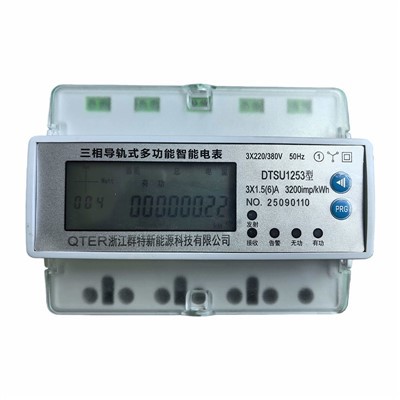
In conclusion, multi-function meters can be effectively used for demand response management. Their ability to provide real-time monitoring, load profiling, remote control, automation, and energy efficiency analysis makes them a valuable tool for both consumers and utility companies. By using multi-function meters to implement demand response strategies, consumers can reduce their energy costs, improve their energy efficiency, and contribute to a more sustainable energy future. Utility companies can benefit from grid stability, cost savings, and improved customer engagement.
Multi Function Meter If you are interested in learning more about how our multi-function meters can support your demand response management needs, please feel free to contact us. Our team of experts is ready to discuss your specific requirements and provide you with customized solutions.
References
- International Energy Agency. "Demand Response in Electricity Markets: An Updated Assessment." 2019.
- U.S. Department of Energy. "Demand Response: A Key Strategy for a Resilient and Efficient Electric Grid." 2020.
- IEEE Smart Grid Initiative. "Demand Response and Smart Grid Integration." 2018.
Zhejiang Qunte New Energy Technology Co., Ltd.
As one of the most professional multi function meter manufacturers in China, we’re featured by quality products and good price. Please rest assured to buy discount multi function meter made in China here from our factory. We also accept customized orders.
Address: No. 56, Fengxi Road, Tang’ao Yu Village, Liushi Town, Yueqing City, Wenzhou City, Zhejiang Province
E-mail: 251951196@qq.com
WebSite: https://www.zjqtmeter.com/
