In the dynamic realm of automotive and industrial engineering, stop – start engines have emerged as a pivotal technological advancement aimed at enhancing fuel efficiency and reducing emissions. As a long – time supplier of Cummins Pistons, I’ve witnessed firsthand the profound impact these components have on the performance of stop – start engines. Cummins Piston
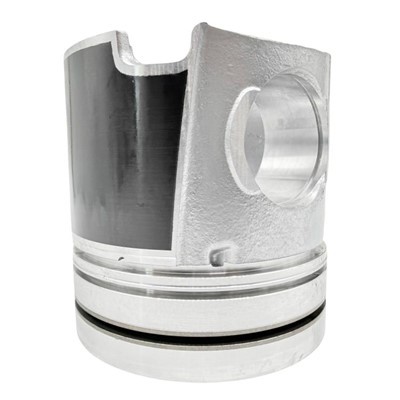
The Phenomenon of Stop – Start Engines
Stop – start engines are designed to automatically shut off when the vehicle comes to a halt, such as at a traffic light or in heavy traffic, and then restart quickly when the driver is ready to resume movement. This technology has become increasingly popular as automakers strive to meet stringent fuel economy and emission standards worldwide. The benefits of stop – start engines are manifold. They significantly reduce idling time, which in turn cuts down on fuel consumption and greenhouse gas emissions. Moreover, as a response to the growing demand for more sustainable transportation solutions, stop – start engines offer a practical and relatively cost – effective way to achieve these goals.
However, with these benefits come unique challenges. Frequent engine starts and stops place additional stresses on various engine components. The engine has to restart smoothly and quickly, often under different operating conditions. This puts a strain on the combustion chamber, the lubrication system, and particularly the pistons.
The Role of Pistons in Stop – Start Engines
Pistons are the heart of an internal combustion engine. They are responsible for converting the energy from the combustion of fuel into mechanical motion. In a stop – start engine, the pistons face several challenges. First, during the restart phase, the piston has to rapidly accelerate from a stationary position. This requires a high – strength piston design that can withstand the sudden increase in force. Second, the frequent heating and cooling cycles due to the on – off nature of the engine can lead to thermal stress on the pistons. Thermal stress can cause warping, cracking, and ultimately, piston failure.
Cummins Pistons have been engineered to address these challenges head – on. The use of high – grade materials is a cornerstone of their design. Cummins employs advanced alloys that offer excellent strength – to – weight ratios. These alloys can withstand high temperatures and pressures, which are common in stop – start engine operation. The alloy composition is carefully selected to minimize thermal expansion, ensuring that the piston maintains its shape and size even under extreme temperature fluctuations.
Performance in Start – Up and Shutdown
One of the most critical moments in a stop – start engine is the start – up. As soon as the driver presses the accelerator after the engine has stopped, the piston has to spring into action. Cummins Pistons are tailored to provide a quick and efficient response. Their design optimizes the compression ratio, which is crucial for a successful ignition during start – up. A well – defined compression ratio ensures that the air – fuel mixture is compressed to the right extent, leading to a smooth ignition and a strong initial power stroke.
During the shutdown phase, the pistons also play an important role. The engine needs to come to a halt in a controlled manner. Cummins Pistons are designed with precision to minimize any residual vibrations while the engine is shutting down. This not only ensures a comfortable driving experience for the passengers but also reduces wear and tear on other engine components.
Durability and Wear Resistance
In a stop – start engine, the pistons are subjected to a higher number of operating cycles compared to traditional engines. This means that wear and tear are a major concern. Cummins has made great strides in enhancing the durability and wear resistance of their pistons. Special coatings are applied to the piston surface. These coatings reduce friction between the piston and the cylinder wall, which in turn decreases wear. Additionally, the coatings provide a barrier against corrosion, further extending the piston’s lifespan.
The internal structure of Cummins Pistons is also engineered for durability. It features a well – designed ribbing system that distributes stress evenly across the piston. This reduces the likelihood of localized stress concentrations that could lead to cracking or other forms of damage.
Lubrication and Heat Dissipation
Proper lubrication is crucial for the smooth operation of pistons in stop – start engines. In these engines, the lubrication system has to quickly re – establish sufficient oil film on the piston surfaces during start – up. Cummins Pistons are designed with oil control grooves and channels. These features help to efficiently distribute the lubricating oil around the piston, ensuring that it reaches all the critical areas. This not only reduces friction but also helps in heat dissipation.
Heat dissipation is another vital aspect of piston performance. The frequent start – stop cycles generate a significant amount of heat. Cummins Pistons are engineered to have excellent thermal conductivity. The materials used in their construction can quickly transfer heat away from the piston crown, where the combustion takes place, to the cooler parts of the engine. This helps to maintain a stable operating temperature and prevents overheating, which can lead to piston seizure.
Real – World Performance and Case Studies
Over the years, we’ve received numerous reports from customers using Cummins Pistons in stop – start engines. In the automotive sector, many car manufacturers have reported improved fuel efficiency and reduced emissions when using engines equipped with Cummins Pistons. For example, in a mid – size sedan model, the integration of Cummins Pistons in the stop – start engine resulted in a fuel savings of up to 8% in urban driving conditions.
In the industrial application, such as in small generators with stop – start functionality, Cummins Pistons have demonstrated exceptional reliability. These generators are often used in remote areas where maintenance is difficult. With Cummins Pistons, they can operate for longer periods with fewer breakdowns, which is a significant advantage for businesses relying on a stable power supply.
The Future of Cummins Pistons in Stop – Start Engines
As the automotive and industrial sectors continue to evolve, the demand for more efficient stop – start engines will only grow. Cummins is constantly investing in research and development to further improve the performance of their pistons. Future designs may incorporate even more advanced materials, such as carbon – fiber composites or ceramics, which could offer even better strength – to – weight ratios and thermal properties.
In addition, with the rise of hybrid and electric – assisted stop – start systems, Cummins is exploring ways to integrate their piston technology with these new powertrain architectures. This will not only enhance the overall performance of the engines but also contribute to a more sustainable future.
Conclusion: Why Choose Our Cummins Pistons

If you’re in the market for pistons for stop – start engines, our Cummins Pistons offer an unparalleled combination of performance, durability, and innovation. We have a long – standing reputation for quality in the industry, and our products are backed by extensive research and development.
DEUTZ Piston Whether you’re an automotive manufacturer looking to enhance the fuel efficiency of your vehicles or an industrial equipment supplier seeking reliable engine components, our Cummins Pistons are the ideal choice. We’re dedicated to providing the best products and services to meet your needs. If you’re interested in learning more about our offerings or would like to discuss a potential purchase, please don’t hesitate to reach out. We’re eager to start a conversation with you about how our Cummins Pistons can take your engine performance to the next level.
References
- Greco, A., & Sorrentino, M. (Eds.). (2018). Piston Ring and Cylinder Liner Dynamics in Internal Combustion Engines. Springer.
- Heywood, J. B. (1988). Internal Combustion Engine Fundamentals. McGraw – Hill.
- Fontana, M. G. (1986). Corrosion Engineering. McGraw – Hill.
Hebei Yuwei Piston Co., Ltd.
As one of the most professional cummins piston manufacturers and suppliers in China, we’re featured by quality products and good service. Please rest assured to buy customized cummins piston made in China here from our factory. Also, quotation is available.
Address: Beizhujiacun Village, Sujiuzhuang Town, Ningjin County, Xingtai City, Hebei Province
E-mail: jack@ywpiston.com
WebSite: https://www.ywpiston.com/
