If you’ve ever browsed through industrial supply catalogs or shopped for equipment for agricultural, construction, or off-grid water management tasks, chances are you’ve seen my company’s gasoline water pumps on a shelf or in a quote. For nearly 15 years, I’ve worked as a supplier focused on these units, and one question comes up at least once a week from builders, farmers, and small-scale project managers: Can a gasoline water pump really handle continuous operation? It’s a fair, practical question—no one wants to invest in a pump that dies mid-job, whether that’s keeping a mine dewatered through a 12-day construction push, irrigating a 200-acre corn field over a hot summer, or supplying water to a remote worksite for three straight weeks. The short answer is: it depends, and as someone who’s tested dozens of pumps and fielded hundreds of feedback calls, I want to break this down honestly, no sales fluff, no overpromising. Gasoline Water Pump
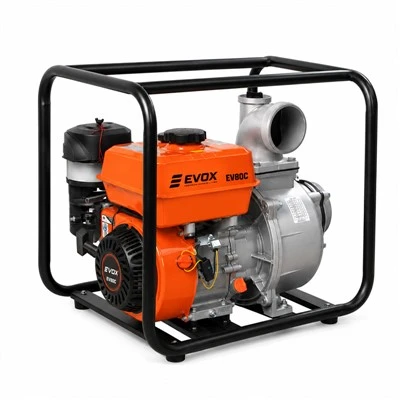
First, let’s get clear on what “continuous operation” actually means for this conversation. Most manufacturers define continuous operation as running a pump 24 hours a day, 7 days a week, with only scheduled maintenance breaks, for an extended period—usually 30 days or more. That’s different from running it 8 hours a day, taking weekends off, for a few weeks, which is more common for general use. Gasoline water pumps are internal combustion engines adapted to move water, and their design balances power, portability, and fuel efficiency, which means trade-offs that matter a lot for sustained use.
Let’s start with the core components of a gasoline water pump: the engine, the pump housing (impeller, volute, seals), and the fuel system. Most small to mid-tier gasoline pumps (the 2-inch, 3-inch, and 4-inch models we supply for residential and small commercial use) use horizontal, single-cylinder four-stroke engines. These engines are built for intermittent use by default—think running a pressure washer for an hour or a generator for a few hours. Their cooling systems, usually air-cooled fins on the engine block, work fine for short bursts but struggle when running nonstop. Air cooling relies on airflow around the engine; if a pump’s sitting in a static spot 24/7 with no wind, or in a dusty, enclosed worksite, the fins can’t dissipate heat fast enough. Over time, that heat damages piston rings, warps cylinder heads, and breaks down engine oil faster, which kills the unit long before its rated lifespan.
That’s not to say all gasoline water pumps can’t handle continuous use. The heavy-duty models we supply for industrial and large agricultural applications use different engine designs: two-cylinder four-stroke engines, and sometimes liquid-cooled systems. Liquid cooling is a game-changer here—it circulates coolant through the engine block and a radiator, so heat is transferred away regardless of airflow. I’ve seen these models run nonstop for 45 days straight during a flood relief project in the Midwest a couple years back, with only 30-minute oil changes every 10 days. The pump housing matters too: models with cast iron impellers and mechanical shaft seals (instead of cheaper rubber seals) hold up better when moving dirty, sediment-laden water, which is common in construction and irrigation. Rubber seals wear out quickly when exposed to mud, silt, or chemicals, so even a good engine will fail fast if the seals can’t keep water from leaking into the crankcase.
Next, let’s talk about the practical limits of continuous operation that most guides skip. Even the best gasoline water pump isn’t going to match a diesel pump’s ability to run 24/7 for months on end, but that doesn’t mean it’s useless for sustained work. The key factors are duty cycle and maintenance. Duty cycle is the percentage of time a pump can run without overheating; most residential-grade gasoline pumps have a 20-30% duty cycle, meaning they can only run 2-3 hours out of every 10, max. Heavy-duty commercial models, which is what we stock for our core clients, have a 70-80% duty cycle, which translates to roughly 17 hours of run time a day before needing a break. That’s more than enough for most irrigation or construction dewatering jobs, where teams might run the pump overnight but shut it down for a 10-12 hour maintenance window each day. If someone tries to push a residential-grade pump beyond its duty cycle nonstop, they’ll burn out the engine in a matter of days—guaranteed, from the hundreds of warranty claims I’ve processed over the years.
I want to be clear, though: I’m not here to shame someone for buying the wrong pump. Last year, a small-scale rice farmer in Arkansas emailed me saying his cheap, off-brand gasoline pump died after 10 days of nonstop use irrigating his fields. He’d bought the smallest model he could find to save money, not realizing it was built for occasional use. When I helped him upgrade to our heavy-duty 3-inch model with a liquid-cooled engine, he ran it nonstop for 42 days straight with only a few oil changes, and told me it cut his irrigation time by a third. That’s the kind of real-world story that matters more than specs on a website.
Another common misconception: fuel quality and filtration. Gasoline engines, even heavy-duty ones, are more sensitive to bad fuel than diesel engines, especially when running continuously. If you’re running a pump nonstop, you can’t use old, stale fuel—ethanol-blended gasoline, which is standard at most stations, absorbs water over time and can cause engine knock if it’s sitting in the tank for more than a month. That knock stresses the engine, leading to overheating and part failure. We always recommend adding a fuel stabilizer if you’re planning long runs, and using high-octane fuel for continuous operation, not the cheap 87-octane stuff that’s more prone to knock. Also, fuel filters get clogged faster when running nonstop, especially if the pump is moving sediment-laden water. We tell clients to check and replace fuel filters every 50 hours of run time, and water separator filters every 100 hours, to keep the engine running steady.
What about extreme environments? If you’re running a gasoline water pump in very cold weather, or very hot weather, that changes the continuous use limits too. In temperatures above 95 degrees Fahrenheit, air-cooled engines have a 20-30% lower duty cycle, because the ambient air is already hot, so they can’t dissipate heat as well. In temperatures below 32 degrees, you have to make sure the engine is properly winterized or heated to start, otherwise it will run rough and overheat. We had a client in North Dakota last winter who tried to run our 4-inch pump nonstop for a construction project, but he didn’t use a block heater. The engine ran rough for 12 hours before seizing, which was a preventable issue, not a design flaw.
So, putting this all together: Can a gasoline water pump be used for continuous operation? The answer is yes, but only if you pick the right model, operate it within its duty cycle, and follow strict maintenance protocols. There’s no one-size-fits-all answer, and that’s why I spend so much time walking clients through their specific needs before they buy. If you need a pump for a 4-hour back-up job at a small pond, an intermittent sump pump for a residential basement, or a weekend camping water pump, a standard residential model works fine. If you need it for 12+ hours a day, 7 days a week for construction, irrigation, or remote worksites, you need a heavy-duty, commercial-grade gasoline water pump with a high-duty cycle engine, liquid cooling if possible, and components built to handle dirty water.
I also want to address the elephant in the room: why would someone choose a gasoline pump over a diesel pump for continuous operation? Diesel pumps are better for very long, 24/7 runs over months, but they’re more expensive upfront, heavier, harder to transport, and require more specialized maintenance. Gasoline pumps are cheaper, lighter, easier to start, and more accessible for remote areas where diesel might be hard to find or transport. For most small to mid-sized continuous jobs, the trade-off of running a gasoline pump with scheduled breaks and regular maintenance is worth it, compared to the cost and hassle of a diesel unit.
If you’re in the market for a gasoline water pump and trying to figure out if it can handle your continuous operation needs, feel free to reach out to our team. We can walk you through your project’s requirements, recommend the right model, and share real-world case studies from similar jobs we’ve supported over the years. There’s no pressure to buy—we just want to make sure you get a pump that works for your specific needs, not a unit that’s underbuilt or overkill.
At the end of the day, my job as a gasoline water pump supplier isn’t just to sell units. It’s to make sure our clients have the right information to get the job done, without wasting money on equipment that can’t keep up. Continuous operation is totally possible with the right pump, the right maintenance, and a clear understanding of what your project requires. You don’t have to gamble on a cheap off-brand unit that will die mid-job, or overspend on a unit you don’t need. Just ask the right questions, do your homework, and partner with a supplier who will be honest with you, not just push a sale.
Engine References:
- Hydraulic Institute. (2021). Pump Selection and Application Guidelines for Continuous Operation. Hydraulic Standards Council.
- Internal Combustion Engine Manufacturers Association. (2020). Air-Cooled vs. Liquid-Cooled Engine Duty Cycles for Mobile Equipment. ICEMA Technical Report Series.
- American Society of Agricultural and Biological Engineers. (2019). Guidelines for Irrigation Pump Operation and Maintenance for Extended Use. ASABE Standard EP406.1.
- National Equipment and Builders Association. (2022). Construction Dewatering Equipment Best Practices: Gasoline vs. Diesel Pump Performance. NEBA Industry Brief.
- EPA Office of Transportation and Air Quality. (2021). Fuel Quality Requirements for Small Gasoline Engines Used in Agricultural and Construction Equipment. EPA 420-F-21-005.
Evoxpower Technology
Evoxpower Technology is one of the most professional gasoline water pump manufacturers and suppliers in China, featured by quality products and good service. Please rest assured to buy the newest gasoline water pump in stock here and get pricelist from our factory. Contact us for customized service and OEM service.
Address: 11 Fortune Avenue, Yubei District, Chongqing, China
E-mail: stephen@allrightpower.com
WebSite: https://www.evoxpower.com/
