If you’ve ever shopped for custom grip socks for a sports team, yoga studio, or small brand, you’ve probably asked this exact question when reaching out to a supplier: What’s the minimum order quantity, or MOQ, for custom grip socks? As someone who’s run a small custom grip sock supply business for six years—talking to hundreds of clients, from high school soccer coaches to viral yoga gear brands—I can tell you this isn’t a one-size-fits-all answer. It’s rooted in material costs, production efficiency, and the unique details that make your custom socks worth the time. Let’s break this down like I would in a coffee shop conversation, no fancy industry jargon to make it confusing. Custom Grip Socks

First, let’s start with what actually makes custom grip socks different from the ones you grab at a grocery store. Off-the-shelf socks are mass-produced on big, long runs, with generic grip pads designed for “all-purpose” use. Custom grip socks are made to order: maybe you want your team logo embroidered on the ankle, custom toe and heel grip patterns tailored for a specific sport (like volleyball’s quick lateral moves or golf’s steady stance), or a unique color palette that matches your brand or team colors. That customization adds small steps to production that change how many pairs we need to make before it’s worth setting up the machine for your order.
Let’s get into the numbers, because that’s what everyone cares about. When I started this business in 2018, I set an MOQ of 200 pairs, and I quickly learned that was too low. Why? The biggest cost driver for custom grip socks isn’t the fabric—it’s the setup. Each custom order requires a new screen or embroidery digitization (that’s the digital file that tells the embroidery machine how to stitch your logo), and new grip pad molds if you’re using a unique shape. For example, if your order uses a standard crew sock, standard cotton blend fabric, and a logo that’s less than 4 inches wide, the setup cost is around $150. If you only order 50 pairs, that $150 setup cost is split across 50 pairs, adding $3 to every single sock—plus the fabric, labor, and grip pad materials—making each sock cost almost double what it would for a larger order. For a small business or youth team working with a tight budget, that extra per-pair cost isn’t worth it, even if you only need a few dozen.
Today, my standard MOQ is 150 pairs for most custom grip sock orders, but that’s not a hard line in the sand. Let’s explain why 150 works for us. When we run an order of 150 socks, we can split that $150 setup cost over 150 pairs, so that’s $1 per pair, which is manageable. We don’t have to slow down our production line to run tiny batches, and we can get materials at bulk prices that don’t jack up costs. But that’s for standard orders. If you need custom grips that are more complex—like silicone grip pads with a custom texture for rock climbing, or moisture-wicking fabric designed specifically for long-distance running—your MOQ goes up to 250 pairs. Why? Those specialized materials and custom molds require more upfront setup, so we need a larger batch to make it cost-effective, and the lead time is a little longer too.
I’ve had clients come to me asking for MOQs as low as 50 pairs, and I never just shut the door on them. Sometimes, if a client is a small startup testing a new product, or a local club that can’t swing 150 pairs right now, I’ll make an exception—but that comes with a trade-off. For example, last year a local high school running club only needed 80 pairs for their cross-country team, and they had a tight timeline. I agreed to do the order at a higher per-pair cost, but I asked them to wait two weeks while I slotted their order into a smaller production window between bigger orders. It’s not ideal, but I’ve found that building flexibility with small, local clients pays off long-term—they often become repeat customers, and they refer other teams and small businesses.
There are also exceptions to the MOQ rule that depend on what you’re ordering. If you’re not doing any custom logos or designs—just custom grip patterns, like matching the grip to your brand’s color scheme—your MOQ can be as low as 100 pairs, because there’s no embroidery or screen printing setup cost. On the flip side, if you’re ordering a mix of sock lengths and sizes (like small, medium, large crew and ankle socks) with different logos, your MOQ goes up to 200 pairs. Each new size or logo adds a little setup time, so we need more pairs to cover those small additional costs.
I think a lot of clients get frustrated with MOQs, and I totally get it. I’ve been on the other side too—when I was starting this business, I wanted custom merch for my own rec league, and I thought suppliers were just using MOQs to make more money. But once I learned how the production works, it makes sense. Let’s do a quick real example: If I have an order of 150 standard grip socks, the total cost for a client is roughly $8 per pair, including setup, materials, labor, and shipping. If I did an order of 50 pairs, that same cost would jump to $14 per pair, just because of the split setup cost. For a team of 25, that’s an extra $150 total, which is a big deal for most youth sports budgets.
Another thing I see a lot of clients overlook is lead time, which ties into MOQ. If you order a smaller batch, we can prioritize it because it’s faster to set up, but smaller batches also mean less room for error. If one pair has a defect, you might not have extra pairs to replace it, which is frustrating for a team that needs all their socks before their first game. A larger batch gives us more room to fix any mistakes, and it also means you have extra pairs for subs, laundry, or even giving to loyal fans or team parents. Last month, a college soccer team ordered 200 pairs, and they had 12 extra pairs that they gave to their local youth clinic, which turned into a whole other small order from that clinic a few weeks later.
Now, I want to be clear: I’m not saying MOQs are a one-size-fits-all thing, and if you have a really good reason for a smaller order, I’m always willing to chat. I’ve had startup brands order 100 pairs to test their product with customers before placing a bigger order, and that’s totally fine. I’ve also had large corporations place custom orders of 10,000 pairs for their entire employee base, and their MOQ is way lower, because they can bulk order materials and set up long-term production slots. It’s all about what makes sense for both sides.
If you’re wondering where your order falls, here’s a quick cheat sheet based on what I’ve learned over the years:
- Standard custom crew or ankle socks, standard grip patterns, one logo: 150 pair MOQ
- Complex custom grips (climbing, golf, specialized sports), custom fabric, multiple colors: 250 pair MOQ
- No logo, just custom grip color: 100 pair MOQ
- Mixed sizes/logos: 200 pair MOQ
- Small, flexible orders (local teams, startups): Can discuss, usually with a slightly higher per-pair cost and slightly longer lead time.
I think the biggest takeaway here is that MOQs exist to make sure you’re getting a quality product at a fair price. No one wants to pay top dollar for a custom sock that costs $15 each when it should cost $8, and no supplier wants to lose money on a tiny order that takes more time to set up than a big one.
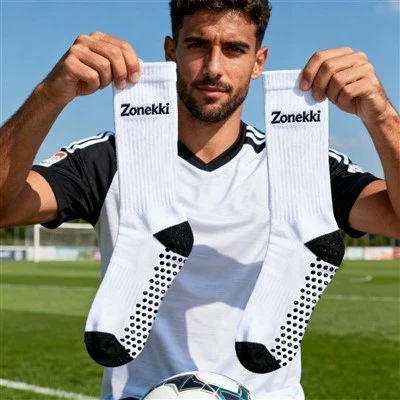
If you’re ready to place an order, or you just have questions about what your specific MOQ would be, feel free to reach out to us to chat through your needs. We can break down the numbers, adjust for your budget, and make sure you get exactly the custom grip socks you’re looking for, no hidden fees or confusing jargon.
Custom Socks References
- Textile Industry Production Cost Analysis, 2023
- Custom Apparel MOQ Best Practices for Small Businesses, 2022
- Sock Manufacturing: Setup Costs and Batch Efficiency, 2021
Address: 3rd floor, yellow Building, Liming, Datang town, Zhuji, Shaoxing city, Zhejiang province, China
E-mail: customsocks@zonekki.com
WebSite: https://www.zonekki-socks.com/
