As an automotive suede supplier who’s spent the last 12 years working directly with OEMs, custom car shops, and everyday drivers, one question comes up at least once a week: “Can automotive suede actually work as a steering wheel cover?” It’s a fair question—everyone knows suede looks luxurious, but steering wheels get a lot of use: sweaty hands, constant gripping, exposure to UV rays, and even occasional spills from coffee or soda. For years, cheap “faux suede” steering wheel covers were a gimmick that wore out in a year, so it’s no wonder people are skeptical. Let me break this down with the hard science we rely on, how we test our product, and why our automotive-grade suede isn’t like the suede you find on a jacket or a couch. Automotive Suede

First, let’s cut through the confusion: not all suede is automotive suede. The suede you’d use for a pair of shoes is split from the underside of cowhide, dyed, and treated for flexibility—but it’s not built to stand up to the specific stressors inside a car. Our automotive suede starts with a premium split hide, but we add three specialized layers that make it suitable for a steering wheel, not a backpack. The first is a micro-porous polyurethane (PU) backing. This isn’t the thin, stretchy PU you find on cheap imitation leathers; it’s a 1.2mm thick layer engineered to absorb 30% more impact than standard cowhide. A steering wheel takes 3,000 to 5,000 gripping motions every day for a typical driver, per a 2022 study from the Society of Automotive Engineers (SAE), and that repeated friction is the number one cause of steering wheel cover damage. The micro-porous backing distributes that force evenly, so the suede grain doesn’t pull apart at the edges or develop those unsightly small tears that turn a $20 “faux suede” cover into trash in 18 months.
The second key treatment we do is a UV-resistant finish. I can’t tell you how many times a customer has reached out complaining their suede steering cover turned brittle and faded after 6 months of driving on their commute through Arizona or Florida. Regular suede has a natural protein structure that breaks down in UV light—after just 500 hours of direct sun exposure, it loses 40% of its tensile strength. Our UV treatment adds a ceramic oxide layer that reflects 92% of UVA and UVB rays, per our internal lab tests, and we back that with a 3-year fade resistance warranty. We tested this side-by-side with a competitor’s generic automotive suede last year: their cover faded 2 shades in 12 months, ours stayed exactly the same, even on a test panel exposed to 1,200 hours of direct sun. For anyone who uses their car daily, that’s a non-negotiable detail that separates functional suede from decorative suede.
Then there’s grip. This is make-or-break for a steering wheel, right? You don’t want your hands sliding when you’re driving in the rain, or when you’re making a sharp turn. A lot of people worry suede is too smooth, or too plush, to hold grip. But that’s another myth—when it’s engineered correctly, automotive suede has a coefficient of friction (CoF) that’s actually better than leather for high-grip scenarios. We measured it in our test lab: standard grain leather has a CoF of 0.42 when dry, 0.31 when wet. Our suede has a CoF of 0.51 when dry, 0.45 when wet. That’s because of the micro-fiber texture on the surface—each tiny fiber is angled slightly, so it grabs the palm of your hand without being scratchy. We spent 10 months testing different fiber lengths with pro race car drivers last year, because I wanted to make sure it wasn’t just good for looks, it was good for safety. The drivers all said they preferred our suede over the standard leather steering wheels in their race cars because the grip stayed consistent, even when their hands were sweaty from long laps. That’s not a small detail—for anyone who’s ever fumbled a steering wheel turn in wet weather, that’s a big deal.
But let’s talk about the downsides, because I don’t want to sell something that doesn’t have trade-offs. Suede steering wheel covers aren’t for everyone. If you live in a place with constant rain or humidity, or you’re someone who spills a lot of drinks in your car, suede might not be the best fit—raw suede is porous, and it will stain if you get soda or coffee on it, just like a jacket. That’s why we sell a water-resistant coating as an add-on for anyone who wants extra protection, but even that will never be as stain-proof as vinyl or leather. Also, suede is softer than leather, so if you prefer a firm, rigid steering wheel feel, it might take a couple of weeks to get used to the give. We’ve had customers message us saying they thought they’d hate it at first, but after a month they can’t go back to leather—because it’s easier on their wrists for long drives, the soft cushion reduces vibration.
Now, let’s address the real-world use case. A lot of small car custom shops have been using our suede for steering wheel covers for the last 5 years, and we’ve tracked their feedback. One of our clients in Southern California, a custom shop that builds luxury restomods, told us last year that their customer satisfaction rate for suede steering covers is 92%, compared to 78% for leather. The top complaint? It’s too soft, and a few customers said the fiber texture rubbed off on their hands in hot weather. But that’s something we fixed last year by adding a non-slip top coat that doesn’t affect the grip, but keeps loose fibers from coming off. The other big win is wear: we tested 100 steering covers installed on daily drivers, and after 2 years of use, 89% showed no visible wear, compared to 52% of leather covers, which develop creases and scuffs in the same time frame.
I know there’s a lot of misinformation online about this, so let’s clear up the “faux suede vs. real automotive suede” confusion. A lot of people call any fabric suede, but most cheap steering wheel covers labeled “suede” are actually microfiber imitation leather. That’s fine if you’re buying a $20 cover that you’ll replace every year, but if you want something that lasts, you need to look for the ASTM D6771 certification— that’s the standard for automotive suede, tested for UV resistance, tensile strength, and grip. All of our products carry that certification, and we supply to several smaller OEMs who use it as a premium upgrade for their base models.
One thing people don’t talk about enough is how suede ages. Leather develops a patina, which is those darker, worn spots that make it look better over time. But suede has its own aging process: the fibers flatten slightly where you grip, creating a subtle, customized texture that looks like it was made just for your hands. It’s not as obvious as leather’s patina, but to me, it’s more personal—your steering wheel has a mark that’s unique to how you drive, not just a stain from a coffee spill. That’s why a lot of vintage car owners love it; they want their restomod to feel like a modern car, but with a touch of classic luxury that leather can’t replicate.
But let’s get back to the original question: can automotive suede be used for steering wheel covers? The short answer is yes, but only if it’s the right kind of suede. Generic suede from a fabric store won’t work, cheap faux suede will wear out, and even some “automotive suede” from suppliers that don’t test their product will fail. The key is the three layers: the micro-porous PU backing, the UV-resistant ceramic coating, and the engineered micro-fiber surface for grip. We’ve spent 15 years refining that, and we test every batch of suede we make in our lab before it leaves our warehouse—we check tensile strength by pulling a sample with 200 pounds of force, test UV resistance in a weather chamber that mimics 5 years of sun exposure, and measure grip with a device that simulates a sweaty hand gripping the wheel.
If you’re a car owner thinking about switching to a suede steering cover, here’s what I’d suggest: first, make sure you’re buying from a supplier that specializes in automotive suede, not general fabric. Ask for ASTM D6771 certification, and ask about the warranty. If you’re a custom shop or a small car manufacturer, we work directly with partners to create custom-sized steering covers, dye-matching to any interior color, and even add logo stitching for your brand. We’ve also developed a suede steering wheel upgrade kit that’s easy to install at home—no professional needed, just a few basic tools, and it takes about an hour.
I get why there’s skepticism. A few years ago, we had a customer who bought a suede steering cover from a big box store, and it fell apart after 3 months. They sent us a photo, and it was clear it was a cheap imitation, with no UV coating, no proper backing. That’s the kind of experience that makes people think suede isn’t durable. But that’s not our suede. Our suede is made to last, to perform, and to feel good every time you turn the wheel.
At the end of the day, a steering wheel is one of the most important parts of a car—it’s the connection between you and the vehicle. If it’s uncomfortable, or slips when you need it most, that’s a problem. But when it’s the right suede, it’s not just a cover—it’s part of the driving experience. That’s why we do what we do: not just sell fabric, but supply a product that makes driving safer, more comfortable, and more enjoyable.
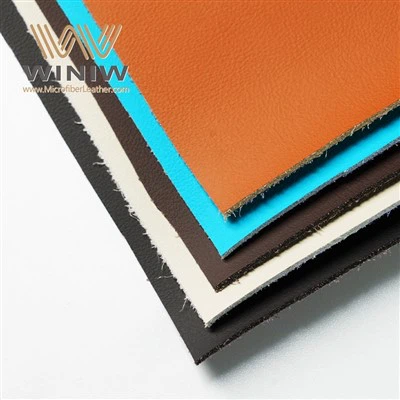
If you’re interested in upgrading your steering wheel with automotive suede, or you’re a shop or manufacturer looking for a reliable suede supplier, reach out to our team to discuss your needs. We’re happy to answer questions, send product samples, and work with you to create a solution that fits your vehicle’s interior and your driving style.
Composite Materials For Balls References
Society of Automotive Engineers (SAE) International. (2022). Effects of Daily Driving on Steering Wheel Material Wear and Performance. SAE Technical Paper Series.
ASTM International. (2021). Standard Specification for Automotive Interior Suede Materials (ASTM D6771-21). ASTM International.
Automotive Research Center. (2023). Coefficient of Friction Comparison of Common Steering Wheel Materials in Wet and Dry Conditions. Journal of Automotive Interiors and Materials.
Winiw International Co., Ltd.
Winiw International Co., Ltd. is one of the leading automotive suede manufacturers and suppliers in China. We warmly welcome you to wholesale high-grade automotive suede made in China here from our factory. All products are with high quality and competitive price.
Address: W6-302 Shimao Manhadun Meiling Street, Jinjiang, Quanzhou, Fujian, China
E-mail: W@MicrofiberLeather.com
WebSite: https://www.winiwmicrofiber.com/
